

Key Highlights
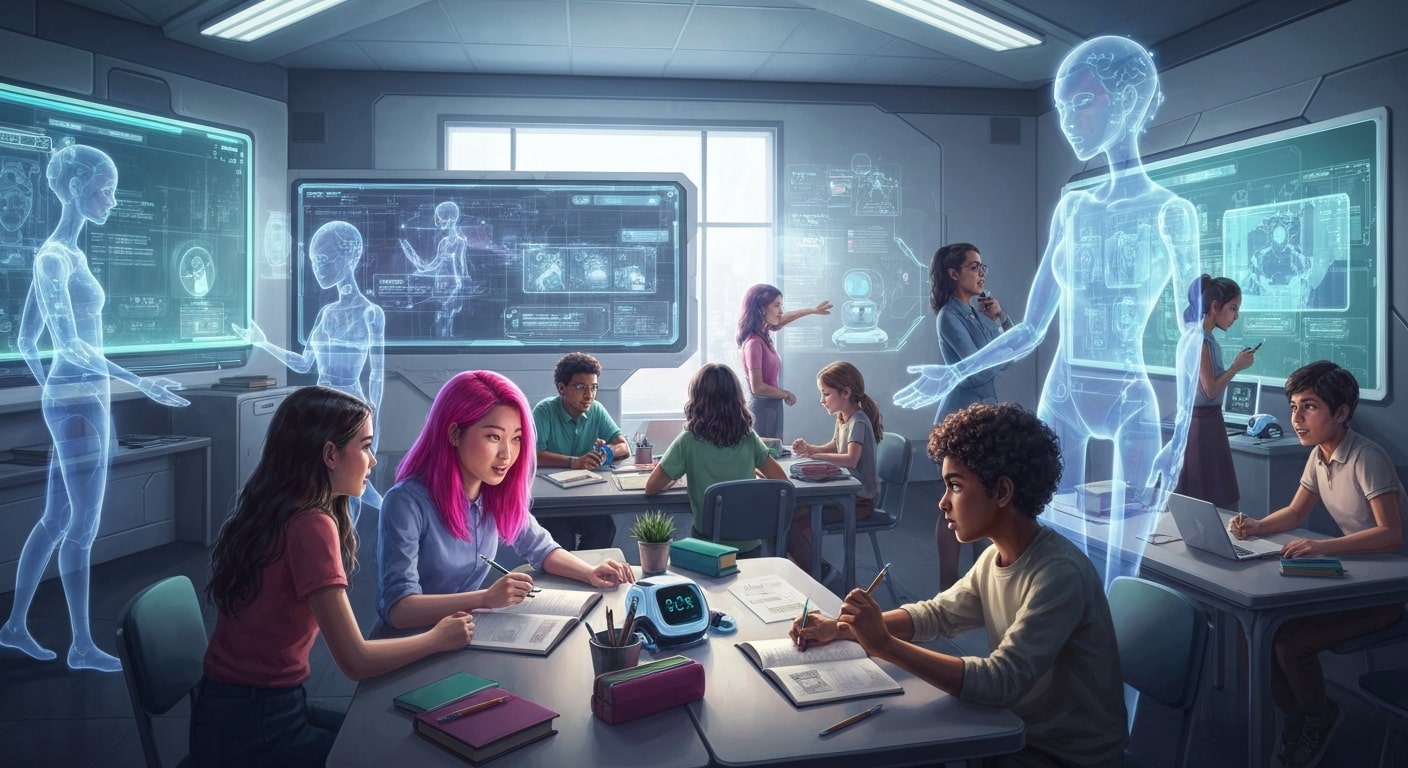
- Artificial intelligence is changing the way we learn. Students get lessons tailored to them and feel more involved in class.
- With generative AI, teachers can make educational materials and quizzes that fit the needs of their students. This can help them save time when making lesson plans.
- Intelligent tutoring systems give students personal help. They can practice and learn hard, complex topics at their own speed.
- Using AI for learning has good sides, but it also brings problems. There be concerns like cheating, keeping data safe, and giving everyone equal access.
- Educators now use AI tools to help teach, but they still focus on keeping human interaction important in the classroom.
- To use AI in a good and fair way, it is important to have clear rules in place for schools.
Introduction
Artificial intelligence (AI) is quickly changing how classrooms work and how students learn. Some people think AI is a great tool that helps improve the learning experience. Others feel that it just helps students find easier ways to do their homework. The use of AI can give every student a learning path that fits them. Still, there are questions about how AI might affect critical thinking and if students will be honest with their work. This article looks at both sides. It talks about how artificial intelligence is used in schools now and what it could mean for the future of education.
Understanding Artificial Intelligence in Education
Artificial intelligence in education uses smart technology to help students learn better. AI technology looks at student data to create learning environments that fit each person's pace and way of learning. This makes it easier for people to learn in a way that works for them, and it can also improve educational outcomes.
AI can now help in classrooms in many ways. It can create lesson plans that fit each student. It does automated grading, which saves the teacher time. This lets teachers spend more time teaching students. The sections below will look at the tools that use AI and how they work in schools.
Defining AI and Its Core Technologies Used in Schools
So, what is artificial intelligence? It is a type of technology that helps machines learn and solve problems almost like people do. In schools, this works by using advanced software and special computer instructions. These systems can learn from what they see and change how they act to help students and teachers. They can also do things by themselves to make learning better in the classroom.
The main tools making AI useful in schools are machine learning and ways to track student performance. These platforms use machine learning to change content for each student based on how they are doing. When these systems study what students do and how they learn, they can change the lessons to fit each student better. This makes learning work well for everyone.
Other important parts include natural language processing and speech recognition. These help AI understand and reply to human language. So, you get more real conversations. With this, AI tutors and support bots can give feedback and answer questions. It feels much like you talk to a person. This makes technology fit better in the learning process.
Key AI Applications Transforming the U.S. Classroom
Artificial intelligence is already changing classrooms in the U.S. A big part of this change is through adaptive learning platforms. These learning platforms use artificial intelligence tools to build a plan that fits each student. The plan can change as the student learns. This helps the student stay interested and do better in their schoolwork.
Many schools now use these adaptive learning platforms. For example, Arizona State University uses them to make learning special for each student. There are several popular artificial intelligence tools and applications teachers use today. These tools can help students get more out of their classes and improve their academic performance.
Generative AI is changing the way people learn. It can make personalized educational materials like quizzes and study guides. These can fit how each person likes to learn. This is very helpful for students who need more help or need a different way to understand new ideas.
Intelligent tutoring systems are now being used more often. Programs like DreamBox Learning use AI to watch how a student does in class and then change the lessons to fit them. With these systems, students get one-on-one help that focuses on what they need the most. This helps them solve problems and feel more sure of themselves while learning on their own.
Good Read: 25 Jobs Most Likely To Be Disrupted By AIPopular AI Tools and Platforms for Learning
Many schools now use learning platforms and AI tools every day. These tools can help teachers with lesson planning and give student support. With AI technology, teachers can do tasks faster. Students also get quick help. For instance, many schools use AI-powered chatbots. These chatbots answer student questions about homework or school details. This makes things easier for everyone.
Many platforms now use natural language processing. The technology lets students read and write in new ways. It can look at what students write and give immediate feedback. With this, students can learn what they got right or wrong right away. This helps them fix mistakes when they happen. They also get to work on their writing skills. Such quick interaction keeps students interested in learning.
Here are some well-known AI tools and what each one can do:
| AI Tool | Function |
|---|---|
| DreamBox Learning | An adaptive learning platform for math that adjusts lessons in real time based on student performance. Visit Here >> |
| Canva | Uses generative AI to help create visual learning aids, presentations, and other educational materials quickly. Visit Here >> |
| Grammarly | An AI-powered writing assistant that provides feedback on grammar, style, and clarity. A tool all writers should use. Visit Here >> |
Benefits of Integrating AI into Teaching and Learning
The potential benefits of bringing AI into the classroom are many. AI gives new ways to solve common problems in education. This helps make learning better for everyone. A survey by Forbes in 2023 showed that 60% of teachers have used AI. Many of them said it helped them reach their educational goals in a better way. AI can make a big difference in educational outcomes by introducing innovative solutions.
AI tools help teachers in many ways. They make lessons feel more personal. They also handle boring tasks so teachers can focus on what matters. Students feel more involved because of these new tools. The next parts will talk about the top benefits of using AI in schools. You will find out how AI can make custom learning paths for each student and make everyday jobs much easier.
Good Read: The Top Free AI Tools You Need To Have In Your Tool BoxEnhancing Personalized Learning Experiences
One of the best things about AI in education is how it helps give each person a learning plan that's just for them. AI personalizes learning by looking at the way you work, how fast you go, and what you like. With this, it can make a learning path that fits you. You get to learn at your own speed. You can spend more time on the things where you feel you need some help.
Adaptive learning platforms lead the way in this change. These learning platforms help with student support by changing lessons while you study. If you have a hard time with a topic, the system will give you more help. If you do well, it will give you harder tasks to keep your interest up.
This way of teaching is good for students who have their own needs. The use of AI helps each student by focusing on what they are good at and where they need help. This makes them feel less upset and helps them feel more sure about their work. Every student gets the support they need to do well. This makes learning fair and better for all.
Improving Student Engagement and Motivation
Keeping students interested and motivated is something teachers want all the time. AI is now a good tool for boosting student engagement. It can make content just for you, based on your learning and what you like. This helps make the learning experience feel more active and real for you. It keeps you focused on your work and may also improve your academic performance.
AI helps you learn better by opening up new ways for student interactions. For example, intelligent tutoring systems give you help and feedback as you work, so you feel supported. They guide you while you solve problems on your own. This real-time help makes sure you stay focused. It also helps you feel good when you learn new things.
AI can help teachers make lesson plans that are always fresh. The teacher does not have to use the same plan for every class. With AI, teachers can change their way of teaching as needed. This helps make lessons feel close to what the class needs. The students stay interested and feel like they are part of the group. The room is full of teamwork and good energy.
Streamlining Administrative and Grading Tasks
Teachers often spend a lot of time on administrative tasks. This takes them away from teaching. AI can help with this problem. It can take care of many routine duties. The AI tools can manage schedules and organize digital resources. That means teachers get more time to help students learn. They can focus more on their work in the classroom. AI handles the behind-the-scenes tasks. This is good for educators, students, and schools.
The grading process is now easier because of AI. Automated grading systems check your assignments fast and give you accurate feedback right away. This helps boost operational efficiency and lets you see how you did quickly. You can then improve in areas where you need help without waiting.
AI helps with these boring jobs. It saves time and makes school better for everyone. Teachers have more energy for important lessons and can help students one-on-one. The way AI works in classrooms helps everything run well. This means teachers and students can keep their minds on learning.
Challenges and Concerns Surrounding AI Use in Education
While AI offers new and great possibilities, it's important to talk about the challenges too. Ethical concerns are a big part of this, especially with data security. When AI gets and uses more student information, the top goal should be to keep data safe and not let anyone misuse it.
Also, the digital divide can get worse if not everyone can use these tools. What problems do schools face when they use AI in education? The next parts will talk about these issues, like cheating and why it is important for all students to get equal access.
Good Read: The Dark Side Of AI ExploredAddressing Students Cheating with AI-Enabled Homework
One thing that many people worry about with AI is that it could make cheating easier in schools. There are strong content creation tools out there, and students can use them to complete assignments without doing the work on their own. This makes you wonder if students are really learning or if they are just finding better ways to cheat.
To stop this, schools need to look at the ethical use of AI. Instead of telling students to stop using these tools, teachers can show them how the use of AI can help with new ideas and research. The tools are there to help, not to do the work for them. By doing this, students can build on their own effort. The aim is to help students grow strong skills for critical thinking and solving problems. These skills can get weak if they count on technology too much.
In the end, dealing with this problem needs a new way to test what students know. Teachers should make tasks the students can't finish by using only AI. This can be activities you do in class, work you make with your hands, or projects where you talk about a topic to others. When schools focus more on how students learn and not just what they hand in, the use of AI can help students really understand things instead of harming learning.
Navigating Data Privacy and Student Information Security
As AI gets used more in education, people are worried about data privacy. AI-powered tools collect a lot of student data to personalize how students learn. This means student data is always being gathered and looked at. Are there worries about data privacy when using AI in education? Yes, there are. There could be data breaches, and the student data could be used in the wrong way. This is a real risk for everyone.
Schools need to put student data safety first. They should set up strong steps to keep it safe. This means the school should have rules on how they collect, keep, and use student data. It is important to be open with parents and students. Everyone should know what data is being collected and why.
The use of data analytics to predict student performance brings up important questions about ethics. These insights can help, but it is important to use them in the right way. We should not use data to label or stereotype students. It matters to find a good balance. We want to improve education by using data, but we also need to keep everyone's privacy safe. This is important to make sure AI is used in the right way for student performance.
Recognizing Equity and Access Issues Among Diverse Learners
AI can help make learning environments better for everyone. But it can also make the digital divide bigger. Not every student has the same tools or devices they need. This means some students, especially those who don't have much money, may miss out on what AI learning tools offer.
This problem is not only about if you have a computer or internet at your house. The strength and features of AI tools can be very different. Schools that do not have enough money may not be able to get the best AI platforms. This means some students will get better help from AI for learning, but others will not. This can make a gap in learning between different students.
It is also important to think about students who have special needs. AI can give support that fits each person, but sometimes the way it is made can be unfair to some students. We have to make sure that AI tools are built and used while thinking of every student. This way, the technology can help with fairness for all, not hurt it.
Redefining the Role of Teachers in an AI-Powered Classroom
AI will not take the place of teachers in the classroom. The role of AI is to help make teaching better. For example, AI can do jobs like grading and making first lesson plans. This gives teachers more time to focus on human interaction with students. With the role of AI in these tasks, teachers can put more energy into great teaching practices. The extra time means they can work more on what matters most, like helping students learn and grow.
This change lets teachers help students learn instead of just giving lectures. They can work on building critical thinking, leading talks, and giving personal help. The next parts show how teachers get used to this new way and what training they need to do well.
How Educators Adapt to AI Integration
As AI gets used more often, teachers are changing how they teach. Many do not see AI as something bad. Instead, they use it as a strong ai tool to help in the learning process. This leads to less of the normal lecture-style classes and more ways that feel lively and let students join in.
Teachers now spend more time on student interactions. AI takes care of regular tasks, so teachers can work with students in groups. They lead talks that go deeper into ideas. Teachers also give help to each student. This way, students feel part of a group and learn social and emotional skills. These are things that AI cannot teach.
Teachers are now using AI to better understand how their students are doing. AI platforms help them look at the data to see where students need help. This lets teachers change how they teach early in the process. They can give extra help to those who need it, so every student gets support in an AI-powered classroom.
Professional Development and Training for Effective AI Use
To bring AI into schools the right way, teachers need the right training. How are schools helping teachers learn to use AI well? Many schools and other educational groups are starting professional development programs. These programs help teachers feel sure and ready with these new tools. Getting this training is important. It helps teachers feel good about using AI in their classrooms.
These programs offer more than simple tips on how to use technology services. They teach ideas for adding AI to lesson planning and curriculum design. The main goal is to help teachers learn how AI can improve what they already do. It is not just about giving them another tool to use.
Ongoing support is very important. It matters just like the first time you train someone. AI technology keeps changing, so teachers will need chances to learn new things all the time, to stay current. When school districts set aside time and resources for professional development, they help their staff use AI technology in a good way. This will help student learning and get them ready for what is next.
Policies, Guidelines, and Best Practices for Safe AI Adoption
As more schools start to use AI, it is important to set clear rules for how it can be used. So, what rules or plans are there for the safe use of AI in schools? This topic is still new, but school leaders are starting to make their own frameworks. These plans focus on ethical considerations and responsible use. They help make sure that the use of AI in schools will be good for everyone.
Having a set of best practices is important for teachers, students, and administrators. It helps everyone know what is expected and where limits are set. In the next sections, we will look at rules that are in place right now in U.S. school districts. These sections will also give ways to use AI that are safe, fair, and work well.
Current U.S. School District Policies on AI
Across the United States, school districts are starting to make rules for how to use artificial intelligence. The technology is changing fast, so many schools do not know the best way to handle it yet. Some schools have put short-term bans on certain tools. Others are setting up groups to look at how the impact of artificial intelligence will affect student learning.
The new rules talk a lot about keeping school work honest and safe. They want students to know when they can use AI to help with assignments and when they should do it on their own. The rules make it clear that students should always give their own work. These guidelines also tell us how student data from AI platforms must be used and guarded. This is to keep everyone's privacy safe.
Right now, the country does not have one set of rules. A lot of areas make their own rules, so you see different ones from place to place. As AI is used more, people will want rules that are the same everywhere and cover more things. The main aim is to set up a plan where schools use the benefits of AI, but at the same time, keep student learning safe from any bad effects AI could bring.
Strategies for Responsible Implementation in Schools
For school leaders who want to use AI, it is important to think and plan well. This helps make sure the use is responsible and fits with best practices. Getting new technology is the first step, but the real job is to use it in a way that supports strong values and ethical use in education. If you set clear best practices early, you can guide your team through any problems that might come up. This will help everyone focus on responsible use and keep things running well.
A good strategy brings in all the people who are part of the school, like teachers, students, parents, and school leaders. When you let everyone talk openly, you help schools deal with worries and build trust. This way of working together makes sure all people get what AI is meant to do and what part they play in helping the plan work out.
Here are some key strategies for school leaders:
- Start Small: Begin with a pilot program in a few classrooms. Use this to see how the use of AI works. Gather feedback before you make it available to every class in the school.
- Prioritize Teacher Training: Always be sure to give teachers ongoing professional development. This helps all educators feel good about using AI tools and know how to use them in the right way.
- Establish Clear Guidelines: Make and share rules that explain the ethical use of AI, data privacy, and academic honesty. Be clear so everyone knows what is okay.
- Focus on Equity: Make sure all students have the same chance to use AI tools. The technology should help close gaps between students, not make those gaps wider.
Conclusion
To sum up, using AI in schools brings both good things and tough problems. AI can help make learning feel more personal. It can boost student engagement and make administrative tasks smoother. But there are worries about data privacy and keeping academic work honest. Teachers are important in making AI work well in classrooms. Ongoing professional development for teachers is needed to help them use AI the right way.
As schools start to use rules and policies with AI, they should make sure every student gets a fair chance. Using AI in a careful way can make learning better and help students get ready for a fast-changing world. If you want to know the ways AI can help your own school or classroom, feel free to ask for a free consultation!
Get Better At Spotting AI Images By Playing The Game At AiorNot.US >>Frequently Asked Questions
How does AI personalize learning for different students?
AI helps make learning feel personal. With adaptive learning platforms, they look at how you do in real time. These learning platforms adjust what you see or learn based on your unique needs. That way, you get student support that works for you. You also get the right help or challenge at the right time. This can lead to better educational outcomes for all of us.
What skills do students need to succeed in an AI-driven education system?
To do well with AI, you need to have good critical thinking skills. These skills will help you make sense of information and use technology services the right way. It's important to know about the learning process and understand how AI can help you reach your educational goals. If you have these skills, you will be able to use AI to boost your student performance instead of relying on it too much.
How are schools preparing teachers to work effectively with AI tools?
Schools help teachers learn with professional development and training. The programs show how to use an ai tool for lesson planning and making educational materials. The idea is to help teachers use ai in their teaching practices. This is done to improve the way they teach, not to take their place.