

How AI Is Already Being Used in Hospitals Today
Artificial intelligence is no longer experimental in healthcare. It is already being used in hospitals, clinics, and research centers around the world, often in ways patients never see.
AI systems help prioritize urgent medical scans, predict patient deterioration, flag medication risks, and reduce administrative overload. These tools work quietly in the background, supporting clinicians rather than replacing them.
As with all powerful technology, AI brings both opportunity and risk. Understanding where it excels and where it can fail is critical for patients, providers, and policymakers alike.
What Is AI in Healthcare? A Plain-English Explanation
AI in healthcare refers to computer systems trained to analyze medical data and identify patterns. These systems use machine learning models trained on large datasets such as medical images, lab results, electronic health records, and clinical notes.
Unlike humans, AI does not reason or understand context. It calculates probabilities based on patterns it has seen before. This makes AI extremely good at narrow tasks like image recognition, but unreliable when operating outside its training data.
That is why AI in healthcare functions best as a decision-support tool, not an autonomous decision-maker.
If you are new to artificial intelligence, this article is part of a broader educational series available in our General AI knowledge hub.
What Are the Benefits of AI in Healthcare?
Earlier and More Accurate Diagnosis
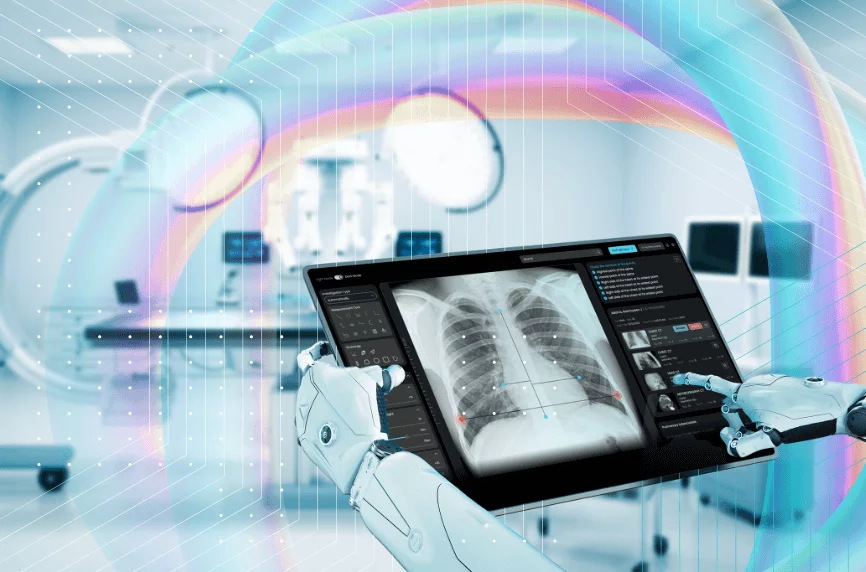
AI has proven especially effective in medical imaging. Algorithms analyze X-rays, CT scans, MRIs, and ultrasounds to detect abnormalities that may be difficult for humans to spot consistently.
These systems act as a second set of eyes, helping radiologists prioritize urgent cases and reduce diagnostic errors.
Good Read: The Rise Of Fake Research Data In Science Due To AI ImagesReduced Administrative Burden
Doctors and nurses spend a significant portion of their day documenting care. AI-powered transcription and summarization tools can automatically generate clinical notes, freeing clinicians to focus more on patients.
Many of these same tools are reshaping offices beyond healthcare, a trend we explore further in our section on AI in the workplace.
Personalized Treatment and Predictive Care
AI enables more personalized care by analyzing patient history, genetics, and outcomes across similar cases. Predictive models can identify patients at risk of complications before symptoms become severe.
Real-World Examples of AI in Healthcare Right Now
Medical Imaging and Diagnostics
AI is widely used in radiology to flag suspicious findings and prioritize scans requiring immediate attention.
Understanding how AI analyzes visual data is increasingly important across many industries. You can explore how AI-generated visuals differ from real images by trying the AI or Not image spotting game.
Pathology, Labs, and Research
AI analyzes pathology slides to identify cancerous cells and classify disease types. In research, it accelerates drug discovery by predicting how compounds interact with biological systems.
Virtual Assistants and Patient Support
AI-powered chat systems help with appointment scheduling, symptom triage, and answering common patient questions, improving access while reducing staff workload.
What Are the Risks of AI in Healthcare?
Bias and Inequality
AI systems inherit biases from their training data. If certain populations are underrepresented, AI recommendations may be less accurate for those groups.
We explore how these biases emerge and why they persist in our guide to understanding how AI systems learn and make decisions.
Over-Reliance on Automation
There is a real risk that clinicians may place too much trust in AI outputs. When systems appear authoritative, errors can go unquestioned.
AI Hallucinations and Medical Errors
Some AI systems, particularly generative models, can produce information that sounds correct but is factually wrong. These errors are known as AI hallucinations.
We break this down in detail in our article on what AI hallucinations are and why they happen.
Privacy and Data Security
Healthcare AI requires large volumes of sensitive data. Protecting patient privacy and securing medical information remains one of the biggest challenges.
What Is the Future of AI in Healthcare?
The future of healthcare AI will focus less on novelty and more on trust, transparency, and integration. Successful systems will support clinicians without undermining human judgment.
Regulatory oversight, explainable models, and ethical deployment will play an increasingly important role as AI adoption grows.
Is AI in Healthcare Safe? What Patients and Doctors Should Know
AI in healthcare is neither a miracle nor a menace. It is a powerful tool that can improve outcomes when used responsibly and cause harm when used carelessly.
The key question is not whether AI should be used, but how it should be governed, monitored, and integrated into care.
Frequently Asked Questions About AI in Healthcare
Can AI diagnose diseases better than doctors?
AI can assist with diagnosis by identifying patterns, but it does not replace clinical expertise or medical judgment.
Is AI in healthcare safe?
AI can improve safety when properly supervised, but human oversight is essential to prevent errors and bias.
Does AI replace doctors?
No. AI is designed to support healthcare professionals, not replace them.