
Key Highlights
- Artificial intelligence helps scammers to make fake profiles for adult ads that look very real.
- These AI-generated images are a big part of deepfake scams and romance scams on social media.
- Scammers want to use these fake profiles to get your personal information and take your money for their financial gain.
- It is important to know the visual and behavioral red flags, so you can protect yourself from these scams.
- AI tools are used to quickly build fake websites and boost fake social media engagement to make these scams look real.
- Your best ways to stay safe are to stay alert and be careful about what you see and read online, as social media threats keep changing.
Introduction
The digital world keeps changing, and so do the ways people try to fool you. Have you seen how real some online profiles feel now? The rise of artificial intelligence, and especially generative AI, gives scammers new ways to make fake things look real. This kind of technology can act like a person. Now, it helps fraudsters write content that's meant to trick people. It is getting harder for people to tell what's real and what's not, mostly in online ads.
Train Yourself To Be Better At Spotting Ai Images At: Aiornot.usThe Rise of AI-Generated Images in Online Adult Ads
Scammers now use generative artificial intelligence a lot to run online scams. This is also true in adult advertising. They use this technology to make lifelike images of people. These images often look like a real person. Then, they use the images to make fake profiles on social media and other sites. The goal is to make these profiles look real, so people trust them because the visuals seem true.
Once they get you to notice them, these people want to trick you. By using AI-made personas, fraudsters try to get you to trust them. After you feel safe, they might try to take your money or get your private data. This is different from how scams used to be. So, it is important to know about this new threat. Now, we will talk about how this tech works and why scammers use it more these days.
How Artificial Intelligence Creates Realistic NSFW Visuals
The reason we see such life-like images is because of generative AI. This type of artificial intelligence is made to create new things. It can make text, sounds, and even pictures or deepfake videos. The AI looks at a large number of real photos. The system learns how people look, how light falls on faces, and how surfaces feel from these pictures. This is how artificial intelligence technology can make such good new images.
As these systems learn, they can make new pictures that look very real. A person could see these photos and think they are from a real camera. This makes it easy for fraudsters to have many new faces and bodies for their fake profiles. Because of this, cyber attacks are now getting more advanced.
People now see content that looks even more real than before. A while ago, there was just basic image generation going on. Now, the deepfake videos and interactive online characters are everywhere. Things move fast, and today, it's hard for most people to know what is real or fake. There be less space between what is true and what is created by the computer.
Why Adult Industry Scammers Prefer AI Images
One big reason that scammers like to use AI images is because it is easy and fast. By using these tools, they do not have to take photos from real people. Stolen photos can be found and traced. With AI, they can quickly make lots of high-quality pictures. This helps them make fake profiles much faster. Scammers can then build many fake accounts all at once. It also lowers the risk that someone will catch them. This is why you see so many fake profiles online now.
This kind of automation makes social engineering much easier for scammers. When they use a face that looks real, it helps them win your trust fast. Scammers use these lifelike images to make their stories stronger, so you feel like you can trust them. Because of this, you might feel safe and be more likely to give out your personal details. Their requests seem real, so people do not feel the need to look out for danger as much.
In the end, the main reason is financial gain. A strong AI-made profile can be used to trick you into scams that try to steal your money or your identity. These phishing attacks get even worse when the fake person looks real and acts real. That can lead you to click on bad links or give away your confidential information.
Key Types of AI-Powered Image Scams in Adult Ads
AI-made images are now causing new kinds of scams. You may often see these scams on social media. Scammers use fake identities to trick you. Sometimes, they make up fake people. Other times, they pretend to be someone real. They do this to win your trust and take something from you. The scam is always there to help them, not you.
Common tactics in deepfake scams often use AI-made videos or pictures. Scammers try to trick people by showing things that are not real but seem true. A popular way is to make up fake identities and then start a romance scam. They build a bond with someone and later ask for money.
It is important to know about these scam types. Learning about them helps you see and stop these tricks. We will now look at some of these ways. Some are deepfake profiles and catfishing. Let's talk about these in more detail.
Deepfake Profiles and Their Role in Deceptive Marketing
Deepfake profiles are now a big worry when it comes to how AI is used in online scams. The problem is not just about fake photos. These scams use AI to make whole fake identities with pictures and even personal stories. Scammers make accounts on social media using these fake identities. They build backstories and talk to other people, so the fake persona looks very real.
This way of fooling people is a strong tool in the world of trick marketing. A scammer can make a deepfake profile to sell a product or service that is not real. This can make the scam seem true. For example, a fake person might write great reviews or talk to people who think about buying things. This can help build trust and make people feel safe, but it is all fake and only helps the scam.
Yes, these deepfake profiles are often used for financial scams. Once the scammer builds trust, they can send you to a fake website to steal your payment details. They may also talk you into putting money in a fake plan that has no real value. Because the persona looks and sounds real, it becomes much easier for them to trick people into giving away their money.
Good Read: How Scammers Use Ai To Grow Their Social Media PagesAI-Generated Personas for Catfishing and Romance Scams
Catfishing is getting worse because of artificial intelligence. In romance scams, people who want to trick you use AI to come up with a perfect person. This fake person looks great in photos and has a convincing story, but it is made up. The goal is to make you feel something strong, like trust or romance, so you believe them.
After the bond forms, the scam starts. The scammer, who stays hidden behind an image made by AI, begins to share false information. Many times, they talk about a crisis or an emergency. They say they need money for this problem. They use the trust and care you feel for them. Their goal is to get you to send money or give your personal information.
Scammers use AI images to make profiles that look good and grab people's attention. They get a lot of followers fast. A big group of people following them helps them seem real and trusted. This way, it gets much easier for them to run romance scams or do other fake things, because the persona looks popular and honest.
Good Read: When Your Online Crush Isn't Real!The Impact of AI Tools on the Sophistication of Online Scams
Artificial intelligence is changing how online scams work. Now, large language models can give scammers the power to write messages that look real. Fraudulent emails and texts often have perfect grammar and feel personal. You cannot always spot these scams from spelling mistakes anymore, because artificial intelligence technology lets them look just like real messages.
It has become hard for people to spot a scam because of this new level of polish. A phishing email, a social media message, or a fake site can feel very real. AI tools help criminals make content that looks good and feels real. This makes it more likely that people will fall for a scam. Next, let's talk about the way scammers make fake profiles and how their tricks on social media keep changing.
Automation and Customization of Fake Adult Profiles
AI has made a big impact in how people use social media. It lets scammers make fake social media profiles much faster and in larger numbers. Now, they can build thousands of different profiles. Each one has an AI-made face and made-up personal info. Scammers use these to make big groups of fake accounts. The fake accounts talk with each other, so they look more real.
This type of automation can be used for social engineering. A scammer may set up bots to control these fake profiles. The bots talk with real users, like posts, and send messages to build trust. They take their time and slowly make you feel safe. After some time, they use this trust to try and get your personal information.
This level of detail makes things hard, even for people who know a lot. While people work on better tools to find fake profiles, the way AI keeps getting smarter means scammers can be ahead. There are so many fake profiles, and they look real enough to make it hard to spot them. Because of this, stopping and finding these scams is always an ongoing task. This real problem can lead to identity theft happening to more and more people.
Evolving Tactics: From Basic Edits to Hyper-Realistic Deepfakes
The way online scammers trick people keeps changing all the time. At first, there were only a few simple scam tricks. A lot of these were just basic, bad photoshopped pictures. Now, the scams people see online are much more serious. Because of generative artificial intelligence, there are now very real-looking deepfake scams. They can be very hard for most people to notice. This is just one way that artificial intelligence can be used by scammers.
These new ways of scamming are growing fast. People who try to steal from us use AI now. They make deepfake videos and clone voices. You could get a video call that looks and sounds like it's from someone you trust. In truth, it's just a copy made by AI. This is what cyber attacks look like now, and it shows how quick these new ways are spreading.
The trend is moving to more interactive and personal ways of scamming. Scammers are using AI to build fake people who can talk with you, answer to your comments as you post them, and change what they say based on how you react. This kind of fake talk feels very real, so many people are more likely to fall for it.
Warning Signs of AI Image Scams in NSFW Content
AI scams online keep getting better at tricking people. But, they are not perfect. The people behind the scams make mistakes, and there can by small signs to show the profile is not real. These are known as red flags. Knowing what to look for is important. It is your first step to keep you safe from fake identities that try to fool you. This is very helpful if you deal with NSFW content.
Seeing signs that something is off with photos or the way someone acts can help keep you safe. Are you ready to notice these red flags? Let's go over the main things in pictures and in how people talk that you need to look out for.
Visual Cues for Spotting Fake AI-Generated Photos
When you see a profile that looks perfect, take a good look at the photos. AI image generators usually have trouble with specific details. If you spot things that look strange or off, it could be one of the red flags. Watch for features that look unnatural or distorted. These are often obvious red flags that help you spot fake images.
Common problems often show up in tricky parts of the body. You can see things like hands having the wrong amount of fingers. Teeth might all look the same or have odd shapes. A background can also show what's wrong. Look for weird lines, things that seem mixed together, or light that just does not fit.
Here are some specific things to look for:
- Unnatural Hands and Ears: Sometimes, the AI gets hands or fingers wrong. It also misses details in the ears.
- Inconsistent Lighting and Shadows: The lighting on a person can look off. It may not match where they are.
- Odd Background Details: The background might have twisted shapes or things that do not make sense.
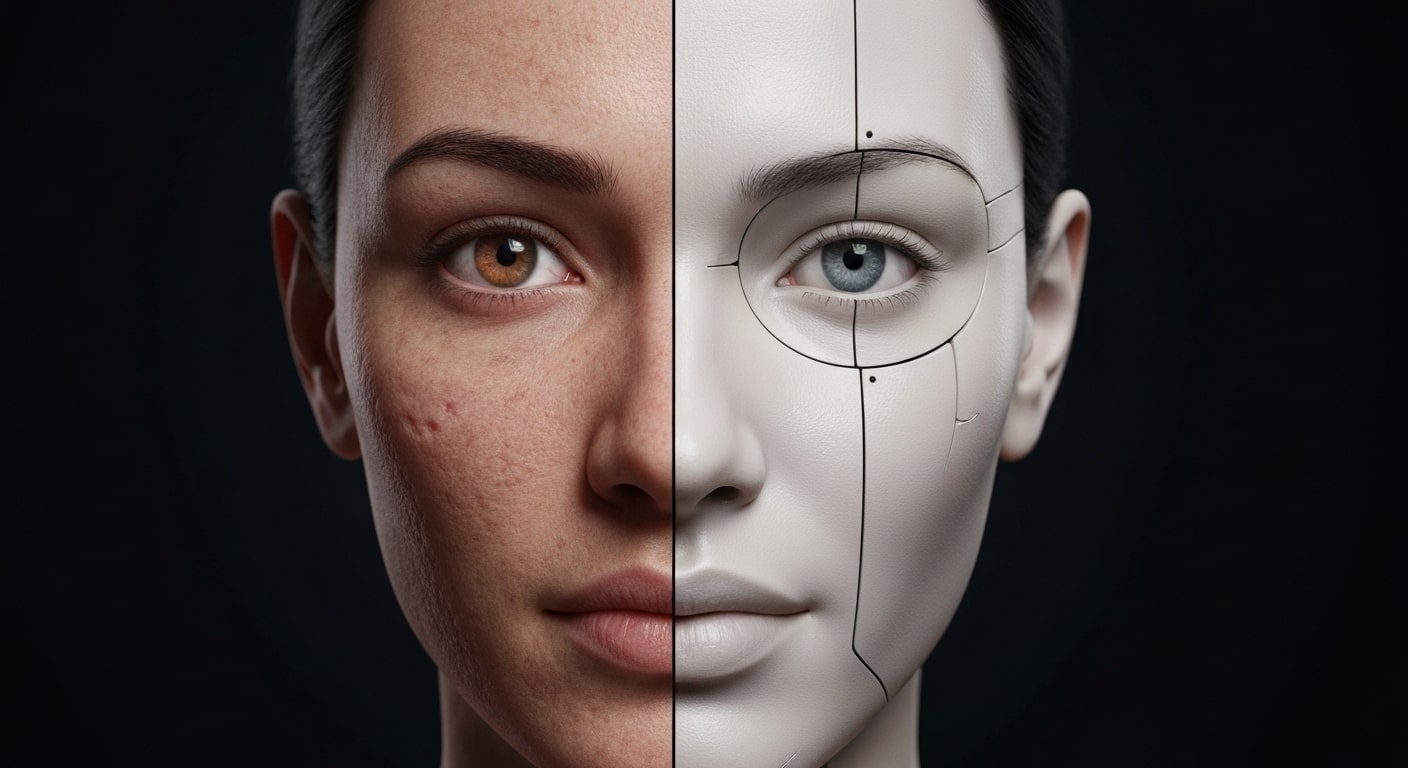
- Perfectly Symmetrical Features: A face that looks too even is rare in real life. It may mean the image is made by AI.
- A Waxy or Too-Perfect Skin Texture: Skin may look very smooth, like wax. This does not look natural.
- Use a reverse image search: A reverse image search can show where an image has been online before. It can help, but might not find new AI-made images.
Behavioral Red Flags in Online Interactions Using AI Images
Beyond how things look, the way someone talks to you online can show they are not a real person. A scammer using an AI-generated profile may act a certain way. They might say they love you or feel a strong bond right away. A fake account may also avoid answering personal questions that a real person would have no trouble with.
Not wanting to join live video calls is a big red flag. They often give excuses, but really, they can't show a live video of the person in the pictures. A lot of times, they want to move the chat from here to a text message or some other app. This is because those places do not have as much oversight.
If you see these actions, you need to be careful. Here are some red flags to watch for:
- They try to make you feel like you need to act right now. This often happens when they make up a problem that isn't real.
- You may be told to send money, some might ask for payment with gift cards or crypto since you can't get it back later.
- They share links that go to fake websites. These look real but are not.
- Their story doesn't add up, or they don't answer simple questions.
- They say no to live proof, like a video call. If you notice these signs, it's best to stop talking with them and report the profile on the platform.
How Scammers Use AI to Grow Followers and Monetize Adult Ads
Scammers know that people on social media often look at numbers to see if someone is real or important. So, they use AI to make fake profiles and boost those numbers. They create fake likes and comments to make it look like their accounts have a lot of real followers and activity. This way, their fake profiles seem popular on social media.
This trick is about making people think a person or group is real to get money. A profile with many followers and comments can look trustworthy. This makes it simple for scammers to pull you into their plan. Let's see how they use social media to trick people and turn their pretend popularity into real financial gain.
Social Media Manipulation with AI-Bots and Fake Engagement
The way scammers use social media is changing now with AI. People can make fake social media profiles. A lot of these accounts use bots. The bots act with the fake profiles and help make their posts look important.
These bot accounts will like their posts and comment under them. Many times, the comments are very basic. The bots will follow these fake accounts too. All of this makes it seem, on social media, like there are real people, and the account is busy with good interaction.
This activity uses artificial intelligence. It tries to fool you and the platform's computer programs. When an account has lots of followers and many people interact with it, the account looks more trustworthy. This makes real users feel like they should follow and join in, too. The fake popularity gets bigger and soon real people begin to join, making the account even more popular.
Scammers use this plan in many ways. They use it to talk up fake things for sale. It is also common in investment scams. When they create a lot of talk and noise, they can change the way people feel about something. This helps them pull in people who do not know what is truly going on.
| Tactic | Description |
|---|---|
| Bot-Generated Likes | AI bots are used to instantly add thousands of likes to a post, making it seem popular. |
| Automated Comments | Generic comments like "Great pic!" or "Amazing!" are posted by bots to simulate user interaction. |
| Follower Farming | Scammers use bots to follow thousands of accounts, hoping for follow-backs to grow their numbers. |
| Coordinated Messaging | Multiple fake accounts spread the same message to create artificial hype for a product or investment. |
Conversion Tactics: From Enticement to Financial Fraud
After a scammer uses an AI-created fake identity to get your trust, they take the last step. That step is called conversion. At this point, the scam becomes about money. They try to get you to give them cash or secret information. The ways they use make you feel okay with sharing your details or sending money.
One way people try to steal your information is by sending phishing emails or messages. These look like they come from a real company. They use AI to make the messages feel personal and more believable. The email or message may tell you to visit a fake website. This site looks like a real one, but it tries to get you to give your login details or your financial information.
The main aim is always to get your confidential information. Here are some ways they use to turn your engagement into fraud:
- Creating a fake emergency. They say you must send money right away.
- Tricking you with a fake shopping or subscription site. They steal your credit card details there.
- Trying to get you to put money in a fake cryptocurrency or stock plan.
- Asking for your contact information. They use this in other identity theft scams.
Conclusion
The rise of AI-made images has changed how online adult ads look and work. These new, real-looking pictures can trick people, so it is important to spot signs that something might be a scam. When you know what to watch for and how these AI image scams act, you can keep yourself safe from getting fooled. The technology is always getting better, so you should stay alert and learn about new risks.
Get Better At Spotting AI Images By Playing The Game At AiorNot.US >>Frequently Asked Questions
How can I recognize an AI-generated image used by scammers?
To spot an AI-made image, look at the small things like hands, ears, and teeth. Artificial intelligence can mess up these parts. See if the skin looks strange or if the background seems changed. A reverse image search can help you catch some old pictures. But it may not work for new images, like those used in fake profiles or deepfake videos.
What should I do if I suspect an AI-powered adult scam?
If you think there might be a scam, the best defense is to stop talking with the person right away. Be sure you do not share any personal information. Block their profile, then report it to the platform and the Federal Trade Commission (FTC). Do not click on any links to scam websites, because these are often used for social engineering.
Are deepfakes being used in online financial scams targeting adults?
Yes, deepfakes are now being used more in financial scams. Scammers make fake identities and use voice cloning, which can copy a person's voice with just seconds of audio. They use this to pretend to be someone you trust. This trick is often used to get access to financial accounts or to fool you into sending money by wire transfer. That can end up as identity theft.
How can AI make scams harder to detect?
AI enhances scams by generating realistic images and videos, making fraudulent content seem credible. This technology can create convincing personas or fake endorsements, tricking users into trusting deceptive ads. With improved sophistication, AI-generated visuals obscure authenticity, making it increasingly difficult for individuals to identify scams in adult advertising.