

Key Highlights
Artificial intelligence does not think in the same way that people do, but it looks smart because the machine follows set rules.
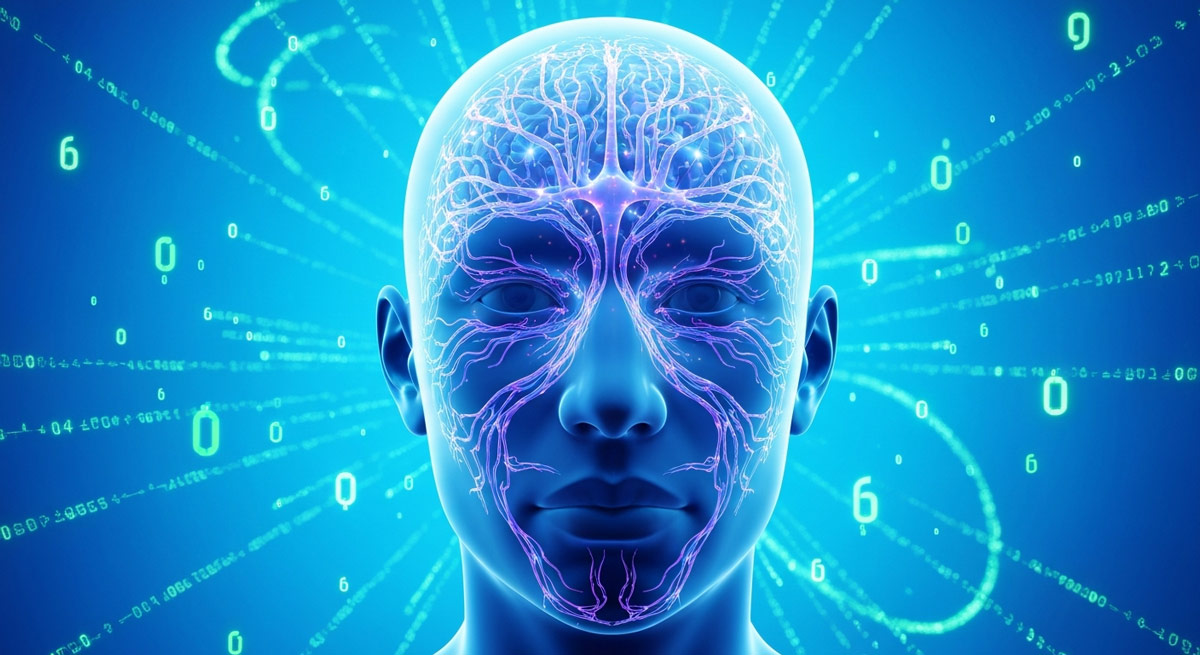
Neural networks copy how the brain works. These networks are very important in decision making for artificial intelligence.
Machine learning lets artificial intelligence get better as time goes on. It learns from a lot of information and gets smarter.
The way this works is to take data in, then use hidden layers to look for patterns, and give a final output.
The power of artificial intelligence to work with data is making big changes in healthcare, finance, and many other areas.
If you know how these work, you can see that artificial intelligence is not hard to understand, and you can use it better for your goals.
Introduction
Have you ever thought about what goes on inside the "brain" of artificial intelligence? These days, you hear about artificial intelligence and machine learning everywhere. The way it "thinks" can be hard to know. Artificial intelligence does not feel or have what people do when they are aware. It uses data, looks for patterns, and gets things done quickly. In this article, I will show you the world of neural networks. These are the systems that help much of machine learning work now. You will see how they take facts, learn from them, and make choices. These choices touch our lives every day.
What Does It Mean for AI to 'Think'?
When we talk about artificial intelligence and say it "thinks," we mean that it works like people do, but it is not the same as people. Artificial intelligence cannot feel things or think just like we feel and think. AI uses a lot of data and looks for patterns in it. After that, it uses these patterns to guess what might happen next.
This way of thinking is a copy of human intelligence, but it is not what people do. The machine intelligences of our own creation help us solve problems. They can do jobs for us too. Inside, these machines use algorithms and data. They do not feel things or think like people do. Now, let's learn what AI is and how its way of "thinking" works.
Good Read: Geoffrey The Godfather Of AI Explains The Future Risks AI HoldsDefining Artificial Intelligence in Simple Terms
When people talk about AI "thinking," they are really saying that artificial intelligence is a type of technology. It lets a computer act in ways that are like a person. A computer with artificial intelligence can learn, solve problems, and make choices. You can think of it like teaching the machine to do things that people can do with human intelligence.
A big part of AI is machine learning. In machine learning, ai systems are not told how to do every step. They learn by going through large sets of information. This helps the ai systems to figure things out on their own. They get better at making choices and guessing what could come next. Because they learn like this, it often looks like they can "think."
These systems do not always follow strict rules. They can change the way they work when new facts come in. The systems know what things are, read words and language, and make new things. This is not real thinking. But, it is a strong way to use data. The process is a lot like how we use our minds.
How 'Thinking' Differs Between Humans and Machines
Human intelligence comes from many sources. It uses logic. It uses feelings. It uses creativity. It also comes from people's past experiences. The way we think is shaped by what we believe and what we know. But ai systems work in a different way. They use math. They use the data given to them when trained. This is how they process information, unlike human intelligence.
AI tries to do what people do by using steps named algorithms. These steps help it find patterns in things. A neural network learns how to find a cat in a photo. It does this by looking at many pictures of cats. Still, it does not really know what a cat is. It just uses patterns from the photos to say, this is a cat.
AI does not truly understand things. It does not have common sense. It cannot make choices using human judgment, like people do. AI can get through a lot of information fast and work on big tasks. But it does not know the reason or "why" behind what it does. AI is a powerful tool for analysis, but it is not aware or conscious.
Good Read: Why AI Struggles So Much With Human HandsPopular Misconceptions About AI Thinking
Many people do not see the thinking of computers as it really is. A lot of what you read or watch in movies and shows is wrong. There are myths about machine learning and what AI can do. What you see in science fiction is often not how things work in real life. It matters to know the truth about machine learning. Do not just follow the hype.
One big thing people talk about with AI is that it might think or feel on its own. That is not how it works right now. The AI you see today, which people call "weak" or "narrow" AI, can only do certain tasks. It cannot feel or think in the way people do. The thought of making AI that knows itself or becomes very smart, called "strong AI," is not real yet. Right now, it is just an idea. There are other things people say about AI, but some of these are not true.
AI systems know some things about context. But, they do not always get it how people do.
AI systems try to be fair. Still, there may be some bias in them.
AI systems cannot feel. They do not have emotions the way people feel or have.
AI systems will not take every job people do right when they come in.
AI is a tool that does what it is set up to do. It uses training data so it can do its work. The system may make mistakes sometimes. If the training data is not good, the AI can be biased. That is why people need to watch AI closely. This will help it work well and be used the right way.
Good Read: The Top 10 Free AI Tools You Need To Try TodayNeural Networks: The Backbone of AI Thinking
Neural networks are used a lot for AI. They help build deep learning models. You will find these models in many apps we use today. Neural networks play a key role in AI development.
Neural networks learn from how the human brain works. They help to spot patterns in data. If you want to know the basics of AI, then you have to learn what a neural network does and how it works. In this text, you will read to know what a neural network is and how it deals with ideas and numbers. You will also get to see why it can be so good for AI.
What Is a Neural Network?
A neural network is a tool used in machine learning. It is built to act like how the human brain works. But, it is not a real brain. A neural network is just a computer system. This system has many small parts called nodes or "neurons". They connect with each other. These parts form several layers in the system. A neural network helps many AI tools to learn. This is why these tools can learn from the data you give them.
These artificial neurons work as a team to look at and handle tough information. Each link between the neurons lets it send a signal. The ai model gets better by changing how strong these links feel. This helps the ai model find patterns and links that people often miss. It can see things that would be too hard for a person to do by hand.
Neural networks play a big part in deep learning. Deep learning is a part of machine learning. It works with networks that have many layers. The layers in the network help it learn from a lot of unstructured data. This helps with jobs like image recognition and natural language processing. How neural networks work lets AI feel like it can "think." This gives AI a strong way to handle complex data analysis.
How Neural Networks Process Information
Neural networks use facts and go step by step. The first thing the network does is take some input. The input can be a picture, words, or some other facts. Then, it goes into the first part. This is called the input layer.
The data goes into one or more hidden layers. The main data analysis happens in these layers. In each layer, every neuron gets what comes from the layer just before it. The neuron works with this input and sends its result to the next layer. This keeps going until the data gets to the output layer. The output layer is the last one. Here, you get the final result, like a guess or a choice.
Neural networks go forward in steps. They start with raw data and turn it into something useful. Here is a simple way to see how it works:
Stage |
Description |
|---|---|
Input Layer |
Receives the initial raw data (e.g., pixels of an image). |
Hidden Layers |
Perform complex calculations to extract features and patterns. |
Output Layer |
Produces the final result (e.g., a classification like "cat" or "dog"). |
Layers and Connections Within Neural Networks
Neural networks are strong because of how their layers and links work together. A basic network has three main layers. The input layer gets the raw data. Next, there is at least one hidden layer. At the end, the output layer gives the answer or prediction.
The main power of machine learning and deep learning is in the hidden layers. A simple machine learning model will sometimes have one or two hidden layers. Deep learning models can have a lot more, even as many as hundreds. Each layer looks for new things in the data. Every time you add a layer, it can find different and deeper features.
With image recognition, the first layer can find lines or edges. Then, the next one can spot basic shapes. As the data moves deeper, it may start to see things like a face.
The links between the neurons in these layers help information move from one to another. These links also help the network work on that information. When you train the network, it changes how strong these links are. It can make some links stronger and some weaker. The network learns good answers this way. This is how AI "thinks." It looks at different pieces of information and then makes a choice based on what it finds.
How Neural Networks Simulate Human Thought
Neural networks are not the same as how people think. But they can help to repeat some of our thinking skills. Machine learning models work by trying to copy what our brains do. For example, they help us see things and connect ideas. This is a big part of human intelligence.
This simulation lets AI do tasks people used to do. The AI can know faces and understand speech. It can also make choices that matter. Here, we will see how the networks act like the brain. The AI is good at pattern recognition. It can handle hard steps when it needs to make decisions.
Mimicking the Human Brain
AI is made to copy how people think. It works by making systems that act like the human brain. A neural network is one of these systems. In a neural network, there are units linked together, and these are like brain cells. The units, which are called neurons, help each other to get things done as a group. While this way is not as hard as what the real brain does, the basic thought behind it is much the same.
Artificial neurons in a network act a lot like the ones in our brains. They send signals to each other. The connections help move facts and ideas from place to place. This lets the network learn the way we do, by doing things or seeing things. When the network looks at examples, it can make some of the links between neurons stronger or weaker. This helps the network get better at the job next time.
Deep learning tries to do what we do in our minds. It adds more layers of neurons. Each layer can find new things or catch what stands out. This helps the network take small bits and build them into complex ideas. Deep learning does not copy how the brain works, but it does act in a similar way. It is also very good at turning simple facts into complex ideas.
Pattern Recognition Abilities
Neural networks help AI to "think" in a way that is like how people do. AI is good at pattern recognition. People are able to spot patterns. But AI can look at way more data than we can. It also finds patterns much faster than people.
Neural networks work well to spot links in large sets of data. They help find fake deals with money, and check health scans for signs of sickness. This is one of the main things they do. They help tools like data analytics platforms and large language models used in chatbots, such as ChatGPT. These models learn to talk like people by looking at the regular ways people use words. This is how they make text feel like a real person wrote it.
AI can spot patterns, even if it does not know what to find when it starts. That's why people use it in many ways, and it is helpful. The network learns which things matter for every task by itself. This helps it pick what to do next.
Good Read: Why AI Is Not Replacing People, Just People Who Don't Use AIHandling Complex Decision Making
AI uses a lot of information at one time. It choices by looking at what is good and what is bad, like people do. Deep learning helps with this. The layers in deep learning let AI see a problem in more ways. This is why deep learning lets the AI solve problems better.
For example, when a company uses AI to help make business decisions like picking prices for a product, it looks at more than one thing. It checks past sales numbers and sees what other companies are charging. It also looks at market conditions. The AI studies how customers act in real time. All these things give signals that move through the layers of the AI network.
The network gives a "weight" to each bit of data. This helps the system see which things matter most when it has to decide something. The result is an idea based on everything the system looks at. Using this method makes AI a powerful tool that helps people make smart choices at work and in other places.
Information Flow Inside a Neural Network
The path data takes in a neural network is easy to see. It starts with data collection from outside sources. Then, this data goes through steps to make a final output. This movement of data lets the neural network learn and think.
When you know how the flow works from start to finish, things feel more clear. You see what is happening in the background. We will look at how data comes into the network. We will also look at how that data gets changed and checked. In the end, you learn how it moves on to give a result.
Data Input: From Real-World Events to Digital Signals
The AI process starts when you do data collection. At this step, you take information from the outside world and change it into a digital format. A neural network can read this digital data. The data may come from many different sources.
Data comes in many forms. Some data is set up in a file or a database. Other data is unstructured, like text from social media, pictures taken with cameras, or even sounds recorded from microphones. A lot of new apps use real time data. This could include store sales records or sensor numbers sent from an IoT device working at a factory.
After you take the data, you should turn it into numbers. An image has many small squares called pixels. Every pixel gets one number. If there is text, every word is given a number. This is done by something called vectors. A computer uses these numbers to read and work with the data. This step is very important for the network. It lets the system get the main information to help it make a choice.
Good Read: AI Hallucinations Explained: Why You Should Always Double Check AI ResultsFeature Extraction and Transformation
When you put the data in the neural network, feature extraction happens next. This step matters a lot when working with unstructured data. The hidden layers in the neural network play a big part in this process. A feature is anything useful. It helps the model to make choices.
In the first layers of the network, the model starts by finding simple bits. If you show it a picture of a car, the first layer will spot lines and edges. When the data moves to deeper layers, these layers use what the first layer saw. This helps them notice more detailed things, like wheels, windows, and doors.
This way of picking features on its own is a big reason why people use deep learning. A data scientist does not have to decide which parts are important. The network learns these things by itself while it trains. Because of this, deep learning can give us really strong data analysis. It also helps AI and neural networks to "think" in a way that is closer to how people do.
Forward Propagation Explained
Forward propagation is the part in a neural network where data moves in one way. It starts at the input layer. From there, it goes through each hidden layer. It ends at the output layer. This step lets the network take in information and give back an output or a guess.
At each neuron in a layer, two main steps happen. First, the neuron takes all the inputs from the layer before it. Then, it multiplies each input by the weight that belongs to it. These weights help the neuron know which inputs matter the most. After adding them up, the sum goes to what is called the activation function. This part helps decide if the neuron will send its signal to the next layer or stop.
Each step in the machine learning process moves across the network. Each layer takes what the previous layer has. This goes on until you reach the last output layer. This is how machine learning neural networks make guesses when they see new data.
Learning in Neural Networks: Training and Adaptation
An AI system will not be quick or smart at first. It needs time to get better. You have to train it with a lot of data. When people do this, the AI learns and makes progress. That practice helps it improve what it can do for you. Then the AI will be good for many jobs and tasks.
During training, the network changes its own settings to do better at making guesses. It does this with the training data. Now, let's see how neural networks learn. We will talk about the ways neural networks learn. A key process called backpropagation helps the network learn and get better.
How Neural Networks Learn from Data
Neural networks learn by studying examples. In machine learning, you give the network a lot of training data. The training data comes with labels, so it shows what the right answer is. For example, you can ask the network to look for spam emails. You give it many emails. Each email is marked as "spam" or "not spam."
The network receives the data. It tries to guess a result for each set. Then, it checks its guess and matches it with the real answer. If the guess is wrong, the network looks at the error. This error tells it how far the guess is from the true answer.
The network learns by using the error to change things inside. These changes often happen to weights and biases. This process happens many times. Sometimes, it goes over millions of rounds. Each time, the network makes small changes, so it can lower the error. With practice, it gets better at what it does. After some time, the network can guess new things well, even if it has not seen them before.
Supervised, Unsupervised, and Reinforcement Learning
AI learning does not be like the way people learn. It has its own way. There be three main types of machine learning. An AI model uses these to get better at tasks. Each one works best for a problem or data that is not the same.
The most used type is supervised learning. With this, the model gets trained by looking at data and the answers people gave. It is a lot like looking at an answer key to help understand how things work.
Unsupervised learning is not like other ways of machine learning. The model looks at data and finds patterns on its own. People do not give the answers for this data.
Reinforcement learning is not the same as other ways of teaching a model. The model learns by trying things and making mistakes along the way. If it gets something right, it will get a reward. If it gets something wrong, it gets a penalty.
Here's a quick summary:
Supervised Learning: This is when you train a model by using data that already has answers, or labels. For example, you show it many pictures and each picture tells if there is a cat. The model learns to spot cats in new images by looking at these examples.
Unsupervised Learning: Here, you use data without any answers or labels. The goal is to find groups or patterns. For example, you look at what your customers buy, even if you do not know who they are. You can put them in groups based on how they shop.
Reinforcement Learning: In this method, a model improves by getting rewards for choices that are good and something not good for choices that are bad. An AI that learns to play a game gets a prize when it wins. This way, the AI learns to do better over time.
The Importance of Backpropagation
Backpropagation is important in deep learning. A neural network uses backpropagation to learn from what it gets wrong. First, it makes a guess when it does forward propagation. Then, backpropagation goes from the end and updates the network. It helps make the network better for the next try.
Here is how it works. First, the network checks how far its guess is from the right answer. This gap is called the error. The backpropagation algorithm then looks for which parts of the network made the biggest errors. It works backward through every layer, starting at the last layer and going up to the first. As it goes, it changes the weights and biases a little in each part. This helps the network get better over time and learn more.
This update helps make the error smaller the next time. The network goes over all the training data and does this step again. Over time, it learns from what it does and gets better. This is the usual way that neural networks use training data to improve today.
Core Processes That Enable AI Decision Making
For ai systems to choose, there are steps that work together in the neural network. These steps use math to change a lot of information into answers you can understand. The answer you get could be a guess, a group, or a new idea to follow.
These steps take place in each neuron and their links. They help the system sort and check information. Now, let's talk about the main things that help AI with decision making. These parts are activation functions, weights and biases, and feedback loops. Each one is important when AI makes a choice.
Activation Functions: Choosing Outputs
Activation functions play a big part in the thinking of computers. In a neural network, they are like door guards. A neuron adds together all it gets, with the weights. After that, the activation function decides what will happen next. It figures out if the neuron turns on or stays off. It also looks at how strong the signal from that neuron will be.
Think of this as a switch. If the stuff that goes into the neuron is strong and goes past a certain level, the activation function turns on the neuron. The neuron then sends its signal to the next layer. But if the input is not strong, the neuron stays off. This helps the network sort out what's important and what is not.
There are a few types of activation functions. Some work like switches, so they can be on or off. Others let the value move between limits. The activation function you pick changes how well the ai model runs. It helps the ai model decide how to use data and what steps to take.
Weights and Bias: Fine-Tuning Neural Network Decisions
Weights and biases are the main things that get changed when a neural network learns. You can think of these as dials that help the network choose how to act. A weight shows how strong and important the link is from one neuron to another. If the weight is high, it means the signal from one neuron will have a big effect on the next neuron in the neural network.
A bias is what you add to each neuron. It can help the model shift and fit with the data more. Think of it as a way to move the output of the activation function up or down. This can help the model learn better over time. Without a bias, the neuron may only work when the input values are strong.
During machine learning training, the network changes its weights and biases all the time. It does this to make better guesses and cut down mistakes. When it works to make the error small, the network learns which inputs matter most. The network pays more attention to these and does not use the rest as much. This is how the network makes better choices in the future.
Feedback Loops in AI Systems
Modern ai systems become better as they practice and use feedback loops. This allows them to learn from people who use them every day. The more things these ai systems see and do, the more they improve and develop. A popular way for them to learn is called Reinforcement Learning with Human Feedback (RLHF).
In this process, people read what the AI system says. You can give a thumbs-up or thumbs-down if you like the answer or not. The system gets this feedback. It helps train the model. Answers people like get used more. Answers people do not like are used less. This helps the system get better with time.
This feedback helps ai systems get more things right and also be helpful. It lets them give people what they want. It allows the model to change and grow. It does not just stay the same. When there is new feedback and data, it keeps up with what people need now. Learning like this helps advanced ai systems make better choices.
Real-World Applications of Neural Network Thinking
Neural networks are not just an idea. People use them in many fields, like healthcare and finance. Business leaders use this technology to help their companies run better. It helps them make better choices. It also brings new chances for their businesses.
This new AI-driven way is now changing how companies do their work. It also changes how we live each day. Let's look at some easy examples of this. One example is predictive analytics in medicine. Another is the way banks use AI to find fraud. You use AI every day, too. It is in virtual assistants. It is also in the engines that give you new recommendations.
Healthcare Diagnosis and Predictive Analytics
In healthcare, ai systems are bringing big changes in the way doctors find and treat illness. These systems use pattern recognition to help doctors. They look at medical images, including X-rays, CT scans, and MRIs. ai systems can find signs of sickness, such as cancer or diabetic retinopathy. Often, these ai systems work as well as, or even better than, the people who read the images.
Besides finding out what is wrong, predictive analytics is used to guess what could happen next with a patient. It also helps show if a sickness may grow worse over time. An AI tool can read things like a patient's health records, their test results, and even their genetic info. It uses all this to say if someone might face health problems soon. With this, the doctor can help early and make a care plan that fits each person well.
This skill helps people handle a lot of hard information. It lowers mistakes that may happen. Doctors get a powerful tool that helps them choose the best option. So, they can use their skills where they make the most change. In the end, it gets better for patients.
AI in Finance: Fraud Detection and Risk Assessment
The finance world uses AI systems to spot fraud and keep risk low. These smart tools can check millions of transactions in real time. They look for anything that does not feel right. They also find signs that show there could be fraud.
The ai model looks at what is normal for a customer. It checks where you shop, how much you spend, and when you buy things. If you make a new buy that is not like what you do most times-like a big spend in a new country-it can spot this. The system will then get someone to check it or will stop it right away.
AI works better than rule-based systems when it comes to finding fraud. It can change and adjust as scammers come up with new tricks. AI is also good for checking risk in lending. The models are able to look at thousands of things at the same time to see if someone should get credit. This helps lenders make fast and good choices.
Everyday AI: Virtual Assistants and Recommendation Engines
You use AI every day, and sometimes you do not even know it. The virtual assistants like Siri and Alexa use natural language processing. This kind of AI helps them know what you say. They listen to you and look at the way your words fit together. Then, they find out what you want. After this, they try to give you the answers you are looking for.
Sites like Netflix, Spotify, and Amazon use AI in their recommendation engines. The AI tries to guess what you may like. It looks at what you have watched, listened to, or bought in the past. Then, it checks how this matches with what other people do. After that, it picks out the content that it thinks you will enjoy the most.
These ideas come from ai systems that use deep learning and generative ai. They guess what you may want to see next. The goal is to make your experience feel more personal. This shows that deep learning and generative ai can look at a lot of data. They help us with what we do in our day-to-day life.
Key Perspectives on AI Thinking: Nigel Toon & His Insights
To learn how artificial intelligence works in real life, it is good to hear from people who know about it. Nigel Toon is known as a visionary leader. He gives advice and shares ideas about how artificial intelligence works and what it may mean for us in the future.
His way of thinking helps us look past all the noise. It helps us understand how this technology works in real life. We should take some time to learn who Nigel Toon is. It is also a good idea to learn the main points from his work on how AI "thinks."
Who Is Nigel Toon?
Nigel Toon is a big name in artificial intelligence. He helps make new kinds of AI technology and is known for that. Nigel Toon started a well-known company that makes chips for artificial intelligence. A lot of people know him as a star of Dragon's Den. He knows a lot about technology and is also smart about business when he talks about artificial intelligence.
His view is important because he talks about AI in a real way. He does not talk about science-fiction ideas. Toon explains how AI works by using simple words. This helps business leaders and other people understand it better.
He says that AI is a tool people make to fix some problems. When you hear more about what he says, you see that this technology is not magic. It is not hard to get, either. AI is strong and keeps getting better at many things. It can do good things, but there are real limits on what it will do.
Good Read: AI Agents Explained: Learn Their Definition, Types, & ExamplesMain Ideas From 'How AI Thinks' by Nigel Toon
In the book 'How AI Thinks,' Nigel Toon and Deborah Meaden talk about what happens in ai systems. They take complex ideas and make them easy to read. This book shows what ai systems can do. It also shows the big impact these systems have on us and the world.
The authors want to help all people learn the basics. It does not matter where you come from or what you do. They say that AI and people do not think the same way. AI uses math and pattern recognition to solve things. It looks at lots of data and finds patterns there. But AI is not aware like us. It does not act or make things with human creativity. Visit Nigel Toon's Website >>
Some of the main ideas from the book include:
AI is a powerful tool, not a new life form. It can help people get more done and work better. But it will not take the place of what people do.
Understanding the basics is crucial. Business leaders and other people need to know how AI works. This way, they can make use of the good it gives and also bring down risks.
AI will have a massive impact on various fields. Right now, this technology is changing creative arts, healthcare, and other fields in fascinating ways.
Conclusion
To sum up, when you learn how AI and neural networks work, you start to see where this technology could go. Neural networks are built to be like how people think. They help computers do hard jobs. For example, they can help doctors spot health issues or guess what may happen with money or stocks. When you look at how data and computer learning work, you can see what AI can do. You also see why it is important to build AI in a good way.
As we learn more about AI, it is good to stay updated. You should think about how it can change your life every day.
Get Better At Spotting AI Images By Playing The Game At AiorNot.US >>Frequently Asked Questions
How does AI learning differ from human learning?
AI learning uses data analysis and math with machine learning. AI systems work by looking at a big amount of data. They try to find patterns in it. Human learning is different. People learn by using context, by having feelings, and by using what they remember from past events. People also use reason to learn new things. AI systems can do this fast and with a lot of data. But people learn in more ways and can react to changes better than AI can.
Does understanding how AI thinks help us use it better?
Yes. When you know that artificial intelligence looks at data and patterns, you can make better business decisions about where to use it. If you know how it works, you give it more relevant data, and you can set goals that are realistic. You will also see its limits. This helps ai systems be good and responsible tools for decision making.
Can AI ever truly think like a human being?
AI today does not think in the same way as people. Generative AI and machine learning can copy some parts of human intelligence. They do this well, but they do not feel or fully understand things the way people do. AI is not aware or alive. A neural network helps to process data, but it is not alive or truly aware.