
Key Highlights
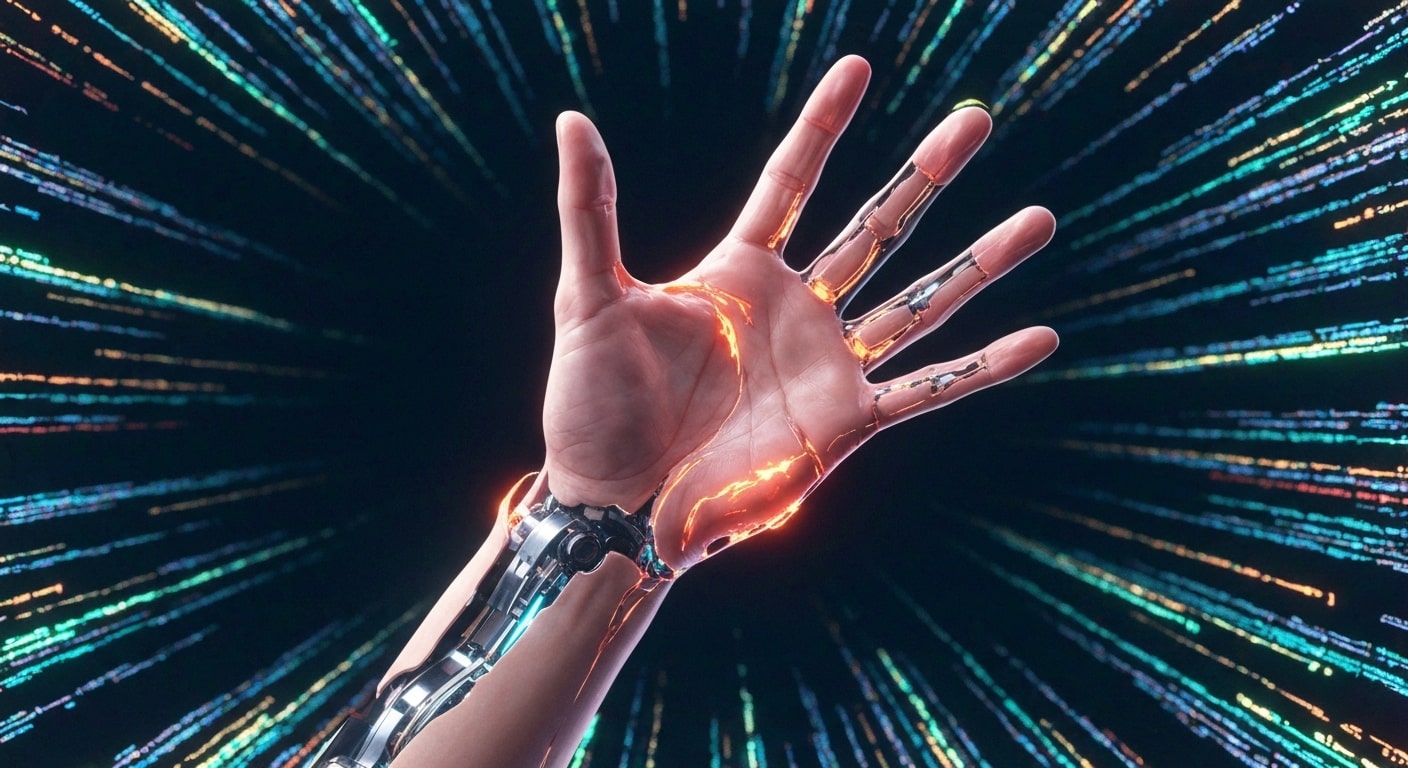
Here are the main things we found when we looked at why artificial intelligence has a hard time with hands:
Human hands are very complex. They have many bones and can move in many ways. Because of this, it is hard for image generators to copy them.
AI models learn by looking at training data. There are not as many clear and detailed images of hands in this data compared to faces.
AI sometimes makes mistakes when creating hands. The hands may have the wrong numbers of fingers, strange sizes, or look unnatural.
The trouble happens because AI sees two-dimensional patterns and does not really know about the three-dimensional anatomy of hands.
Because of this, images made by AI can end up in the uncanny valley. They look almost real but can feel strange or odd.
Even so, newer generative ai models are making good progress. They are getting better at making human hands look real.
Introduction
Artificial intelligence is changing how we create images. Now, with it, anyone can get impressive and creative pictures just by using text descriptions. These tools are so strong that they can make almost anything you want to see. But, there is a common problem in these great new uses. AI often has trouble making real-looking human hands.
Sometimes, you will see pictures where people have six fingers or fingers that look twisted in odd ways. A look into why this happens can tell us a lot about some current limitations of artificial intelligence. It also shows us how image generation by AI works from the inside.
Strange hands might be one giveaway but Who Is Better At Spotting AI Fakes, Humans Or Machines?The Complexity of Human Hand Anatomy
Take some time to look at your hands. There are many things you use them for. They show great skill and power. A human hand has 27 bones. There are many joints in it too. A lot of muscles help your hand move. It is a very complex part of our body's anatomy. Because of this, generative ai finds it a big challenge to make hands the right way when working with ai models.
Current AI, like stable diffusion, can spot patterns well. But it often does not understand the structure of a detailed body part like the hand. Creating the hand's special look and how it works is a hard job for any image generation tool.
Structure and Movement: What Makes Human Hands Unique
Human hands have a lot of range of motion, which makes them hard for AI to copy well in art. Each finger moves on its own, and the thumb helps with many grips and tasks. This skill makes human hands able to do many things, which leads to many ways the fingers and hand can be shown. Because of this, AI finds it tough to get human hands right in pictures.
For an AI, picking up these light moves is tough. It needs to get the spatial relationships between each finger, the palm, and the wrist in many ways. If the AI does not really know about 3D space, it can show hands that feel stiff, look odd, or are not even possible to make.
It's not only about making a still picture; it is about showing a tool that can move and change in real time. This is a place where ai models today often do not do well. That is why we see some odd images now and then.
Visual Nuances: Details That Challenge AI Models
AI image generators have a tough time making hands look real. Hands have a complex shape, and there are many small details that are hard for ai to get right. The way hands look-like their size, skin, and how they are shaped-can be different for each person. This means that image generators must use a high level of detail to make hands look good, but that can be hard to do.
An AI has to learn how to pick up small details from text descriptions and visual patterns in its data. If there is not enough detail or the data does not match up, it can be hard for the AI to guess the right thing. This can cause the AI to make some clear mistakes.
Specific challenges include:
Light and shadow move over the knuckles and veins in different ways.
Wrinkles and creases change every time the hands move.
Each finger has its own length and size, and these match up with the others.
Fingernails and cuticles show in their own way.
How AI Image Generators Learn to Create Hands
To figure out why AI often makes mistakes with hands, you need to see how it learns. Generative AI is not like people. It doesn't think or feel. It works by looking at huge datasets that have millions of pictures with text descriptions. By doing this, it starts to link text to visual patterns it finds in the data.
When you tell an image generator to make a "hand," it looks at the patterns it knows. It puts together a picture that fits your request. The result is a mix of all the hands it has ever looked at.
Training Data: Teaching AI What a Hand “Looks” Like
The quality of an AI model comes from the training data used to teach it. Why do AI image generators often struggle to create hands that look real? A big reason is that the datasets they use are not perfect. In photos, hands can be hard to see. People may hold objects, and sometimes only part of the hand shows up. A spokesperson for Stability AI said that "in AI datasets, human images show hands less clearly than faces." This makes it tough for the ai model to learn how to make hands that look real.
This means the AI model has fewer clear, good examples of hands in its training data than it has for other body parts, like faces. Because the training data is not always correct or steady, the AI does its best to figure things out, but this can cause mistakes in anatomy. The model just copies what it learns from the data, even if those examples are not clear or finished. A study looked at how ChatGPT labels the parts of a foot. It showed that the AI could make detailed labels that looked right but were actually not correct at all.
|
AI Interpretation (Common Error) |
Anatomical Reality |
|---|---|
A jumble of 3-4 fingers and a thumb |
A hand with four distinct fingers and an opposable thumb |
Fingers of uniform length |
Fingers with varying, specific lengths and proportions |
|
Joints that bend in impossible ways |
Joints with a limited, specific range of motion |
|
Smooth, featureless skin | Skin with wrinkles, veins, and unique textures |
The Role of Deep Learning in Hand Image Generation
Yes, there are clear technical reasons why AI-generated hands often look odd. The problem comes from how deep learning works. Image generators that use algorithms like generative adversarial networks (GANs) can make pictures by spotting 2D shapes in images. But this kind of ai does not really understand 3D shapes. That is why hands sometimes look strange in pictures made by these models.
Professor Peter Bentley from University College London says these are "2D image generators that have absolutely no concept of the three-dimensional geometry of something like a hand." The AI does not know that a hand is a real thing with depth and shape. It only knows what a hand often looks like in flat pictures.
This problem shows up when the AI tries to draw a hand from a odd angle or in a tricky pose. The ai and its algorithms do not have a 3D model inside. So, they often make hands look odd or wrong. That is why we see so many hands that look strange.
Common Mistakes in AI-Generated Hands
When you see pictures made by generative AI, there are clear mistakes that pop up again and again, especially when it comes to drawing hands. You will notice the same errors, and they help you tell if the image is made by AI. The problems might be small or so odd that they feel very strange. It shows that generative AI knows patterns but does not get how real bodies work.
From extra fingers to joints that can't happen, you see how tough it is for image generators to get human hands right. These problems come up often. Let's go over some of the most common mistakes.
Finger Count and Placement Errors
AI image models often struggle with hands and fingers in artwork. One of the biggest mistakes is about the number of fingers. You may see hands in ai artwork that have six or seven fingers, and sometimes only three or four. The reason for this is that ai tries to make things simpler. It works on the idea of how a hand should look, but doesn't get every part right. This makes the hands look odd or not real.
These problems with placement in image synthesis happen because the AI tries to use what it has learned from its training data. If the training data has a lot of images where the hands have fingers that cross over each other or are covered up, the model will think it is fine to have a sketchy amount of fingers. The AI cares more about the main look of the hands than about being right with body parts.
Common mistakes you might see include:
-
An extra finger showing up between the other fingers.
-
A thumb set on the wrong side of the hand.
-
Fingers that join together or split off from each other.
Proportion Issues and Unnatural Poses
AI image models sometimes get hands wrong because of size problems and odd ways the hand is positioned. You might see the fingers being the same length, or the palm being too big or too small compared to the fingers. Sometimes the thumb is too long. These small mistakes can make the hand look off and not right.
These problems happen because the AI model does not understand how the body moves. It does not know how the joints should bend or how the parts of a hand should work together in space. So, the AI might make a hand that looks like it is in a position people cannot do without getting hurt.
The hand can seem stiff, bent, or twisted in a way that does not look normal. This odd look is a good sign that the ai puts pieces together by using patterns. The ai does not really know how a hand works.
Why Hands Are Harder for AI Than Other Body Parts
You might ask why AI can make a face that looks almost perfect but then put it on a body with hands that look odd. This happens because hands are not like other body parts. The shape, size, and movement of hands make them hard for AI to get right. So, hands really show what the AI can and cannot do.
Hands move a lot and change shape, while faces stay about the same. This makes hands hard to work with. This problem shows where stable diffusion and other models still have trouble. That's one of the current limitations.
Anatomical Complexity Compared to Faces or Bodies
AI has a tough time with the anatomy of hands more than other body parts because hands are much more complex. Human hands come with 27 bones and can move in many ways. But, facial features such as eyes, nose, and mouth stay in about the same spots and are easier for ai to deal with.
Faces can show many different expressions. But the bone structure under the skin stays the same. The AI finds it easier to learn because the spatial relationships between facial features do not change. A face is usually seen from the front or from the side. This gives the AI consistent data to work with.
Hands are not just in one place or pose. You see, the hands move a lot. They grip, point, and make signs all the time. Because of this, the AI needs to learn more rules to show hands the right way. This is why hands can be much harder for the AI to make than other body parts.
Limitations in Data Quality and Diversity
There are some clear technical reasons why AI-made hands look odd. A big reason is the quality and range of the data used for training the AI. Most big datasets come from the internet. The images in these datasets are often not great for teaching the AI about anatomy.
For an AI to learn about hands, it needs a big set of clear, sharp images. The images should show hands from many angles and in a lot of poses. But most images of people do not show hands well. Hands in the pictures can be blurry, covered, or holding something. This makes AI get confused.
Key limitations in datasets include:
Poor Visibility: The hands in many photos can be hard to see. Sometimes they are blocked or not clear in the image.
Lack of Variety: A lot of datasets do not have enough hands from different age groups. You often will not find hands shown in different places or doing different things.
Inconsistent Labeling: Many photos are just marked as "person" without any specific data points showing the hands. This makes it tough for the AI to learn about them.
Technical Reasons Behind Strange AI Hands
There are few deeper technical reasons that cause strange hands from ai models, not just problems with data. The way these ai models read and understand pictures is part of the issue. The system is built to spot big patterns, not to show small body details exactly the right way.
Problems with image segmentation and how the model reads text prompts make a big difference in the odd results you see. The way these issues work is right at the center of the "hand problem" in ai image generation.
See The Best AI Images Of 2026 At AiorNot.USProblems with Image Segmentation and Detail
One technical reason AI doesn't generate normal-looking hands is because of trouble with image segmentation. The ai model tries to spot and split up different parts in a picture. When it looks at a hand, it needs to tell apart each finger, the palm, the knuckles, and the wrist. They all need to be seen as separate parts but still linked together.
However, the current ai models still have a tough time with this job, especially if the fingers are close together or overlapping. The ai sometimes cannot see the edge of each finger, so they might get mixed up and look like one strange shape. Because the level of detail is low, the ai cannot show each part the right way.
When the AI does not really know where each part of the hand starts or ends, it mostly guesses. This is why you often see strange and wrong hands in early generative AI artwork. It is a common problem with generative ai and ai when drawing hands in artwork.
Ambiguities in Labeling and Model Interpretation
Another reason for odd hands is that the training data can be unclear, and the ai model may read it in different ways. The ai learns from pictures and text labels matched with them. When you have the text saying "person holding a cup," the ai does not get details about how the hand looks. If the text for training data is missing good info, the ai has to guess about the shape and feel of the hands.
A study looked at how chatgpt does when picking bones in a foot x-ray. The result showed it got none right. This shows chatgpt and other language-based models can't read special images well. The model might know the word "hand" but does not know the exact way it is put together.
This is why you may see a hand with six fingers sometimes. The model sees that fingers belong to a hand, but it does not always follow the rule of having five. The way it understands this comes from looking at what is most likely in the training data. It doesn't use actual anatomical facts. That is why ai image models often make mistakes with hands and fingers.
Progress in AI Hand Generation: Improvements & Challenges
Despite many challenges, the world of generative ai is moving forward quickly. People who build ai are aware of the hand problem, and they are working hard to fix it. Lately, changes in ai models show things are getting better. The hands that ai creates now look more real and correct than before.
While there are still some problems, it is clear that things are getting better. The latest versions of popular image generators show strong improvement. These tools use better technology and more careful training. AI is starting to move past one of its biggest issues.
Examples of Realistic AI-Generated Hands
Are there examples where AI made hands that look real? Yes. The tools we have now are much better than before. Some of the top AI models can make really accurate images of hands. Tools like Midjourney, which got new updates, can do this well. OpenAI's DALL-E 3 and new ones from Stability AI also give good results.
These platforms are made to be better at understanding hand anatomy. They use better algorithms and work with high-quality and different datasets. Because of this, they can make hands that have the right number of fingers. The fingers and overall look are just like real hands. Hands also come out in natural poses.
Has ai gotten better at making hands in images? Yes, it has gotten much better with time. The big mistakes do still show up, but they are not as common now in the best ai models. The new results show that the people building ai are learning more about how to solve this hard problem.
Persistent Issues and Recent Advances
Even with new progress, strange results still show up often enough that you can see them. Making perfect hands every time is still hard for generative ai and ai, especially when the scene is hard or the pose is unusual. You might still notice small issues like odd proportions or joints that bend in a way that does not look natural, even when the image looks good in most ways.
The progress in the last few months has been big. AI companies keep working on the hand problem. They change things again and again to make it better. Midjourney did an update in March 2023 that was made just to fix how hands look. Users saw better results right away.
Recent progress that is helping to fix this issue includes:
Focused Training: AI companies are choosing datasets that show hands clearly and with more detail.
-
Increased Model Complexity: New models have more settings. This helps them see small details and notice more complex links.
Hybrid Approaches: Some systems are mixing several AI methods, like GANs and diffusion models, to get better results.
Conclusion
In short, the reason AI has trouble making good human hands in image generation is because of how the anatomy works and how many small visual details there are. These things make it hard for AI to get finger placement, hand shapes, and poses right. AI uses training data to help it learn, and deep learning is making things better, but there are still some accuracy problems. Knowing about these issues shows what AI can't do yet with human hands, but it also means there could be more work and new ideas coming in image generation later.



Frequently Asked Questions
Can manual editing fix AI-generated hand errors?
Yes, for sure. A lot of artists and designers start with images made by ai. Then, they use photo editing tools to make changes. Fixing mistakes, such as extra fingers or strange shapes, is something they do often. This helps them get the final product to look great. It is a normal part of how people work with ai to make a finished piece look right.
Do people notice strange hands in AI images?
People can easily tell when hands look odd. This is because of the "uncanny valley" effect. If something looks close to real but has small mistakes, it feels strange to us. We look at hands a lot. Our minds know what hands should look like. So, if hands look weird, people notice right away and feel uncomfortable.
Are there cases where AI gets hands completely right?
Yes, there are now many stories about how generative ai can make images of hands that look good and are correct. The latest image generators show big growth in making real-looking hands. A lot of the time, they get it right. Still, sometimes, the results may look odd or not come out as users want. Making things the same every time is still hard for ai.